
A Frustrating Problem That's More Common Than You Think
You press the button on your garage door remote, the door starts its descent, and then — just before it reaches the floor — it reverses and goes right back up. You try again. Same thing. Maybe it works on the third try, maybe it doesn't. Either way, you're standing in your driveway in Mooresville wondering what's going on.
This is one of the most common garage door complaints we hear from homeowners across Morgan County. The good news is that it's usually caused by something identifiable and fixable. The not-so-good news is that ignoring it can lead to bigger problems down the road, including a door that stops working entirely or becomes a safety hazard.
Let's walk through the most likely reasons your garage door reverses before closing all the way and what you can do about each one.
The Safety Sensors Are Misaligned or Blocked
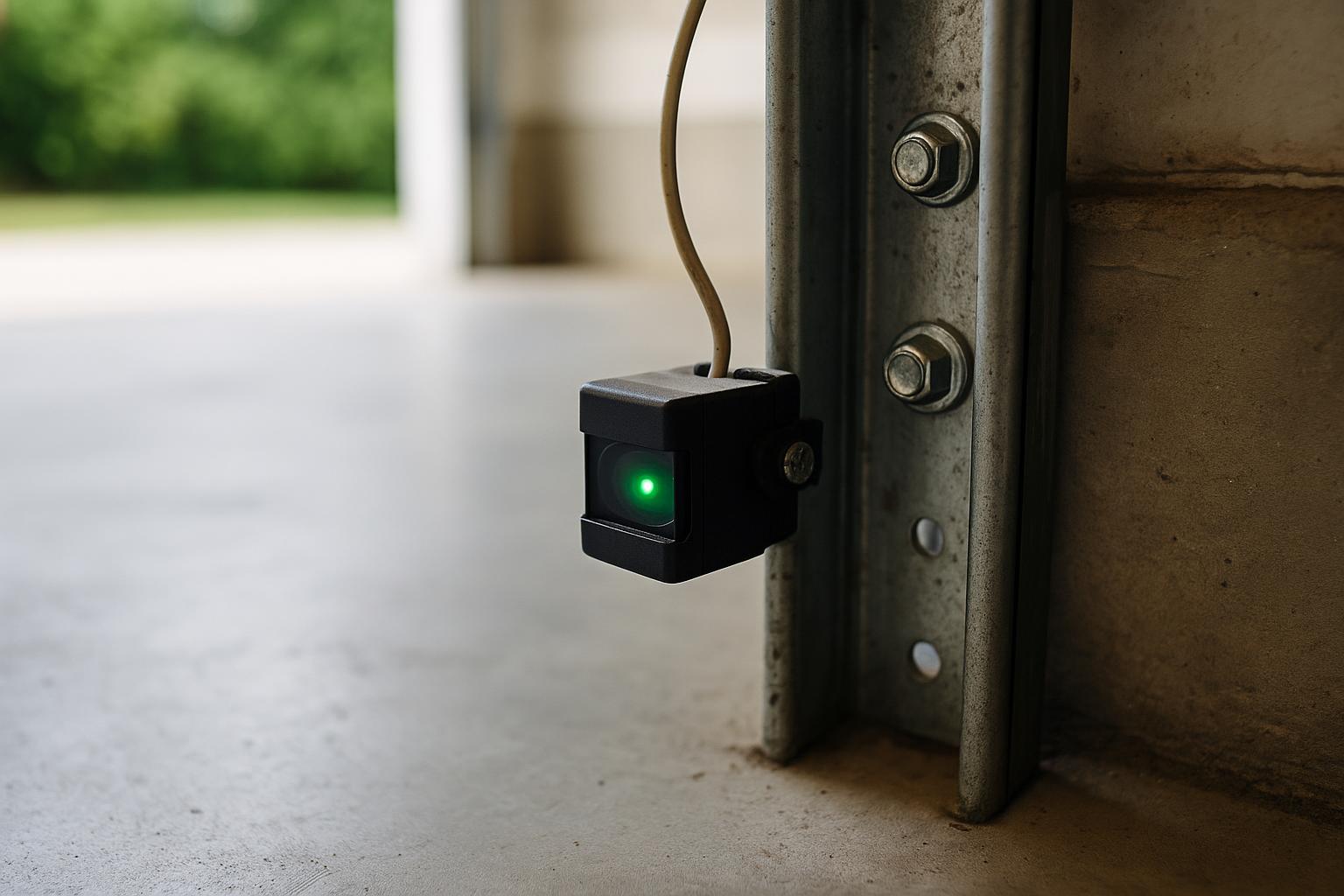
This is the number one cause of a garage door that reverses before reaching the floor. Every garage door opener manufactured after 1993 is required to have photo-eye safety sensors mounted near the bottom of the door tracks, about six inches off the ground. These sensors send an invisible beam across the opening. If anything breaks that beam — a bike, a trash can, a leaf, even a cobweb — the opener interprets it as an obstruction and reverses the door.
Here's what to check:
- Look for obstructions. Walk along the bottom of the door opening and make sure nothing is in the path of the sensors. Even something small can trigger a reversal.
- Clean the sensor lenses. Dust, dirt, and spider webs accumulate on the small lenses over time. Wipe them gently with a soft cloth.
- Check the alignment. Each sensor has a small LED light. If one is blinking instead of glowing steadily, it's likely out of alignment. The two sensors need to face each other directly. A small bump from a lawnmower or a kid's bike can knock one out of position.
- Inspect the wiring. Look for any frayed, damaged, or disconnected wires running from the sensors to the opener unit on the ceiling.
In our experience working with homeowners in Mooresville and the surrounding areas like Plainfield and Camby, misaligned sensors account for well over half of these reversal calls. It's often a quick fix, but if you can't get the lights to stay solid after adjusting them, it may be time for a professional to take a look.
The Close-Limit Switch Needs Adjusting
Your garage door opener has settings called limit switches that tell the motor how far the door should travel in both the open and close directions. If the close-limit switch is set incorrectly, the opener may think the door has hit something — like the floor — before it actually has. The opener's built-in safety feature then kicks in and reverses the door.
This issue often shows up after a new opener installation or after someone has made adjustments to the unit. On most openers, the limit switches are adjusted using small screws or dials on the back or side of the motor unit. Your owner's manual will show you exactly where they are and how to adjust them.
If you're not comfortable making this adjustment yourself, it's a straightforward fix for a garage door technician. A small turn of the dial is usually all it takes.
The Tracks Are Dirty, Damaged, or Misaligned
Your garage door travels along metal tracks on either side of the opening. If those tracks are bent, clogged with debris, or have shifted out of alignment, the door can encounter resistance on its way down. When the opener senses that resistance, it assumes something is blocking the door and reverses it.
Take a close look at the tracks from inside the garage:
- Are there any visible dents or bends in the metal?
- Is there a buildup of grime, grease, or debris in the track channel?
- Do the tracks look parallel and properly secured to the wall and ceiling?
You can carefully clean the tracks with a damp cloth and check that the mounting brackets are tight. However, if a track is bent or significantly misaligned, that's a repair best left to a professional. Attempting to force a bent track back into shape can make the problem worse and potentially cause the door to come off the tracks entirely.
The Rollers Are Worn Out
Garage door rollers — the small wheels that ride inside the tracks — wear down over time. When they become cracked, chipped, or lose their smooth rotation, they create friction. That added resistance can be enough to trigger the opener's auto-reverse function.
If your door has been making grinding or scraping noises in addition to reversing, worn rollers are a strong possibility. Nylon rollers typically last longer than steel ones and operate more quietly, which is something worth considering if you're due for a replacement. Many homeowners in Mooresville have made the switch to nylon rollers during routine maintenance visits and noticed an immediate difference in how smoothly and quietly the door operates.
The Opener Force Settings Need Adjustment
In addition to limit switches, your garage door opener has force settings that control how much power the motor uses to open and close the door. If the closing force is set too low, the opener may not have enough power to push the door all the way to the floor, especially as springs age and the door's balance shifts slightly over time.
Most openers have separate adjustment screws or buttons for up-force and down-force. Increasing the down-force slightly may solve the problem. But be cautious here — setting the force too high can override the safety reverse feature, which exists to prevent the door from closing on a person, pet, or object. If you're unsure, it's better to have a technician make this adjustment safely.
When to Call a Professional
Some of the fixes above are well within the abilities of a handy homeowner. Cleaning sensors, removing obstructions, and wiping down tracks are simple tasks that can solve the problem in minutes. But there are situations where calling a garage door professional is the smarter move:
- The door reverses and you can't identify any visible cause
- You've adjusted the sensors and limit switches but the problem persists
- The tracks are visibly bent or the door seems off-balance
- You hear unusual sounds like popping, snapping, or grinding
- The door has become noticeably heavier to lift manually, which could indicate a spring issue
A garage door that won't close properly is more than an inconvenience — it's a security concern. An open garage is an open invitation, and here in Mooresville, most of us use our garages as a primary entry point to our homes.
Keep Your Door Running Smoothly
Regular maintenance goes a long way toward preventing issues like unexpected reversals. Having your garage door system inspected once a year allows a technician to catch worn parts, misaligned components, and other small problems before they turn into bigger headaches. It's a small investment that can save you from emergency repairs and extend the life of your door and opener.
If your garage door has been reversing and you've tried the troubleshooting steps above without success, we're here to help. Mooresville Garage Door serves homeowners throughout Mooresville, Martinsville, Brooklyn, Monrovia, and the greater Morgan County area with honest, straightforward garage door service. Give us a call and we'll get your door closing the way it should.